

End-to-End Software Outsourcing
Outsourcing software development allows organizations to collaborate with a third-party team that brings specialized skills and domain expertise to the table. It provides cost-effective access to experienced developers proficient in a wide range of technologies — from cloud computing to user interface design. Once the client's requirements are understood in detail, our team can initiate work immediately, ensuring minimal delays and faster time-to-market.
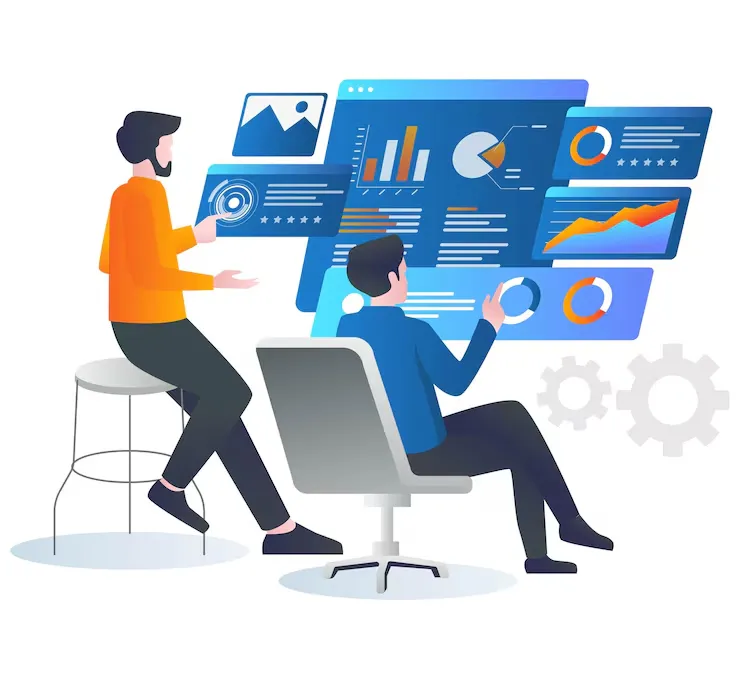
Software Outsourcing Solutions
Software Outsourcing means the organization has opted to have its software developed by an external agency, rather than relying on in-house development. From smart customization of existing platforms to full-cycle custom software development, MLRS serves as a reliable and experienced partner for delivering scalable, robust, and cost-effective software solutions.
We are a qualified team of professionals with in-depth knowledge of the latest market trends and technologies. Entirely dedicated to our clients' success, our multilingual engineers work seamlessly to build products and services that meet — and often exceed — expectations.
Most Effective Software Outsourcing Models
There are three main models to work with:
Staff Augmentation
Our expert Business Analysts, in collaboration with experienced Software Engineers, integrate seamlessly with your internal team to work on projects. These professionals become an extension of your existing workforce — often working directly from your offices — and remain fully engaged until the successful completion of the project.
Delivery Team Model
In this model, MLRS deploys its skilled professionals from our office, working closely with your single point of contact. Our certified Project Management Team takes full ownership of the development process, ensuring a structured workflow, hands-on supervision, and clear accountability. Seamless communication is maintained throughout the project lifecycle.
Project-Based Model
MLRS takes full ownership of the entire development lifecycle — from architecture design and workflow planning to timelines and quality testing. This end-to-end approach ensures clear deliverables, defined milestones, and accountability at every stage, so you can focus on your core business while we handle the technical execution.
Benefits Of Software Outsourcing with MLRS
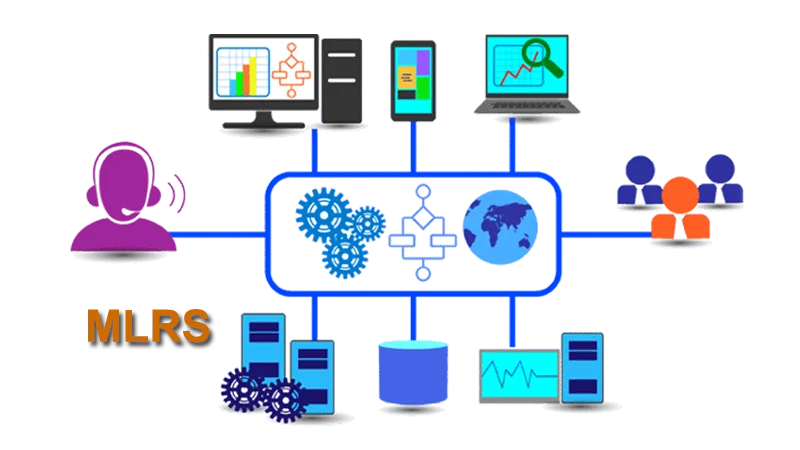
- Collaborate with top-tier software professionals of the Software industry.
- Boost your project's performance and overall productivity.
- We’re flexible enough to accommodate last-minute changes based on your evolving needs.
- Minimize project risks with our hybrid working model.
- Security is our highest priority — your data stays protected on our dedicated cloud servers.
- No need to ramp up a team — your project can be initiated immediately.
Still unsure whether software outsourcing is the right fit for your business? Contact us for a detailed project review. We'll assess the feasibility of your requirements and, after thorough analysis, offer the most effective solution within your budget. We also evaluate potential risks associated with your industry and suggest tailored mitigation strategies. With MLRS, you gain access to world-class development services — delivering results swiftly, securely, and professionally.

Stages of a Software Outsourcing Project
Choose the Right Methodology
Select a development model based on your project’s size, complexity, timeline, and budget — like Waterfall, Scrum, DevOps, or FDD.
Define Project Specifications
Create a detailed specification document and brainstorm changes across departments to ensure complete planning and smooth execution.
Select Your Outsourcing Partner
Once ready, connect with MLRS. We’ll understand your needs and suggest the best-fit solution for your business.
Track Progress with Tools
Use ticketing systems or shared portals to monitor progress, manage workflows, and keep everyone aligned on the same page.
Ensure Thorough QA Testing
Final testing — especially integration and UAT — is crucial to ensure the project works reliably in real-world scenarios.
