

MLRS Business Process Solutions LLP.

Methodology

At MLRS, everything we do is guided by a design thinking mindset. We ensure that every team member—regardless of their role or department—adheres to these principles and applies them in their daily work.
Our software engineers are equipped with the latest skill sets and industry knowledge, enabling them to deliver innovative, user-centric solutions. A team of skilled developers combined with our method-driven approach is our promise of consistent excellence.

Below are some of the core methodologies practiced at MLRS

1

Empathize – Understand the User

To truly innovate, we must first understand the people we are working for.

  • Observe – Study users in their environment
  • Engage – Conduct interviews and explore the “why” behind user behaviors
  • Track – Pay close attention to even the smallest details

2

Define – Identify the Real Problem

We turn our observations into actionable insights.

  • Identify patterns – Look for recurring behaviors or issues
  • Synthesize insights – Translate observations into meaningful conclusions
  • Classify needs – Group and prioritize user needs for clarity

3

Ideate – Explore Creative Solutions

We combine analytical thinking with creativity to generate bold ideas.

  • Brainstorm – Rapidly generate a wide range of ideas
  • Mind map, sketch, storyboard, SCAMPER – Use structured creativity tools
  • Challenge assumptions – Reconsider everything we’ve taken for granted

4

Prototype – Build to Learn

We quickly bring ideas to life in a tangible form.

  • Build fast and lean – Focus on speed, efficiency, and experimentation
  • Identify variables – Test specific parts of the idea
  • Keep the user in mind – Design with empathy at every step

5

Test – Learn from Real Users

We validate solutions before putting them in front of real users.

  • Show, don’t tell – Let users interact with the prototype directly
  • Create experiences, not explanations – Focus on usability and reaction
  • Compare multiple prototypes – Gather insights by testing different versions

6

Flexible by Design, Consistent in Philosophy

Whenever possible, we apply all five stages of the Design Thinking process. When circumstances don’t allow full execution, we still maintain the underlying philosophy:
To innovate and simplify in order to build the highest-quality software in the most efficient way possible.

Scrum

Prioritization – Collaboration – Iteration

At MLRS, each of our teams is led by experienced professionals who ensure every project adheres to the core principles of Scrum: prioritization, collaboration, and iteration.
We rapidly prioritize tasks, distribute responsibilities efficiently, and time-box every activity. Through short Sprints, our teams continuously refine their process, correcting course as needed. These iterations are key to delivering consistent progress and early value.
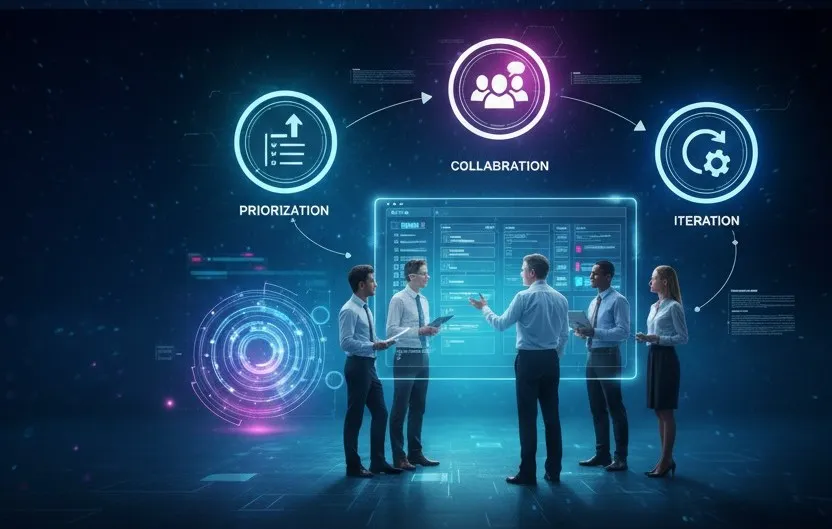
Scrum-mlrs

Our Scrum teams conduct daily stand-up meetings, where they focus on three essential questions:

  • What did you accomplish since the last meeting?
  • What are you working on until the next meeting?
  • What is blocking your progress?

These quick, focused sessions help us track completed and pending tasks using top-tier project management tools. With efficient leadership and clear communication, our developers stay aligned and productive.
In short, time-boxed iterations, we re-prioritize effectively and steadily reduce the product backlog. While Scrum is powerful, we also recognize that no single methodology fits every project. That’s why MLRS maintains expert teams trained in seven distinct methodologies, allowing us to adapt to each project’s unique structure and needs.
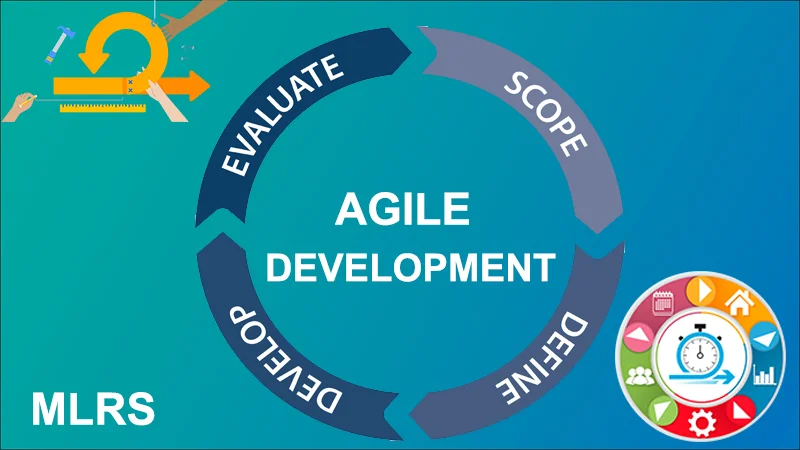
Agile

Working Software – Customer Involvement – Adaptability

Agile is our default approach for service-oriented projects and collaborative development cycles. We deliver early and continuously by creating the right environment—keeping our developers motivated, focused, and empowered to apply their judgment and expertise.

Agile is especially useful when:

  • Client involvement is crucial throughout development
  • Product features are flexible or evolving
  • Requirements are not fully defined from the start

Through small, incremental changes, our teams test frequently and move swiftly toward the final product—adapting efficiently to changing business needs.

AGILE

Agile is our standard practice for services-oriented projects, code and design deliverables. Our teams employ it when the client’s involvement is crucial for development or when the product’s features and functions are not set on stone and there are margins to improve and adapt. Through small incremental changes we test and advance swiftly towards the end product while remaining flexible to evolving circumstances and initial plan modifications.

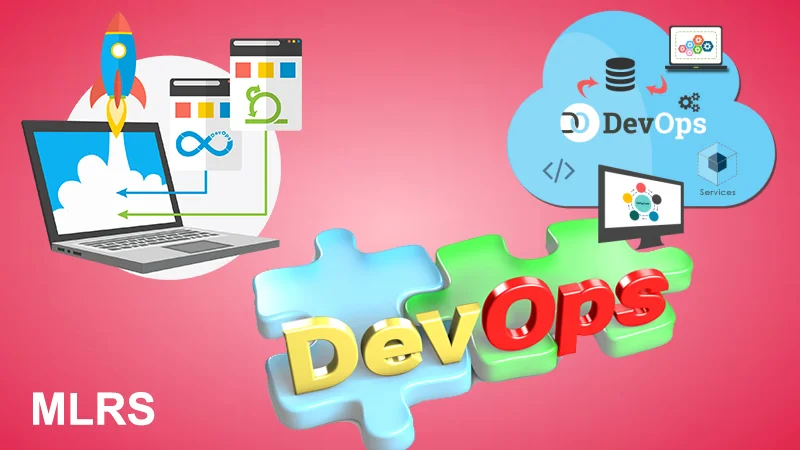
DevOps

Measurement – Automation – Culture

At MLRS, we believe:

  • If we can measure it, we can improve it.
  • If we can automate it, we can focus on what matters most.
  • If we build the right culture, improvement becomes natural.

DevOps is the backbone of our excellence in delivering complex, large-scale solutions. It enables seamless collaboration between development and operations teams, while minimizing risk and accelerating delivery.

We apply DevOps principles across critical areas:

Telemetry & Alerting: We track application logs and performance metrics to monitor system health and catch errors early. Proactive alerting ensures timely diagnostics and resolution—before issues impact users.

Rigorous Testing: We implement strict entry and exit criteria during testing, ensuring all changes are thoroughly validated. This saves valuable time during UAT (User Acceptance Testing) and prevents regressions.

Continuous Deployment: By using version-controlled repositories and structured branching, we make small, incremental changes that lower risk. Ineffective updates can be quickly rolled back without disrupting the system.

WhatsApp